The Dupe Economy: An Algorithmic Train Worth $81 Billion That's Displacing 'Taste'
71% of Gen Z actively seeks dupes, entire platforms exist to find them, and the algorithms shaping what you see may be deciding what you want in the first place.

The global counterfeit and lookalike market is on pace to hit $81 billion this year. That figure includes direct knockoffs, but the faster-growing segment is what the industry calls dupes: products that replicate the look or function of something more expensive without copying the logo. They're (more or less) legal, nobody's hiding the fact that they're buying them, and at this point, the whole thing has become its own economy with its own infrastructure.
TikTok dupes
If you spend any time on TikTok, you've probably seen dupe videos. There are Stanley tumbler dupe videos, Lululemon Align review dupe videos, fragrance dupes, and others. Apparently,70% of Gen Z respondents say they regularly purchase dupes, and the whole vibe around buying knockoffs has shifted in the last decade. It used to be something you kept quiet about, and now it's proof that you know how to shop and aren't getting played by 'brand markup'.
The tools that make it frictionless
A handful of platforms have popped up in the last couple of years that are purpose-built to make this easier.
Dupe.com lets you paste the URL of any product or upload a photo, and its search engine pulls visually similar items from thousands of retailers ranked by price. There's also a browser extension that does this passively while you browse. The company says users regularly save 70% to 90% on furniture.
Phia does something slightly different. It compares the item you're looking at against a database of millions of new and secondhand listings across The RealReal, ThredUp, StockX, Poshmark, and eBay. You click a button that says "Should I Buy This?" and the app tells you whether the price is high, typical, or fair. It finds you the same item, already owned by someone else, for less. They've indexed over 40,000 retail and resale sites.
Washing Dupes on Facebook Marketplace
Facebook Marketplace has over 1 billion monthly users and accounts for roughly 22% of the global online resale market. What's interesting is how dupes move through it.
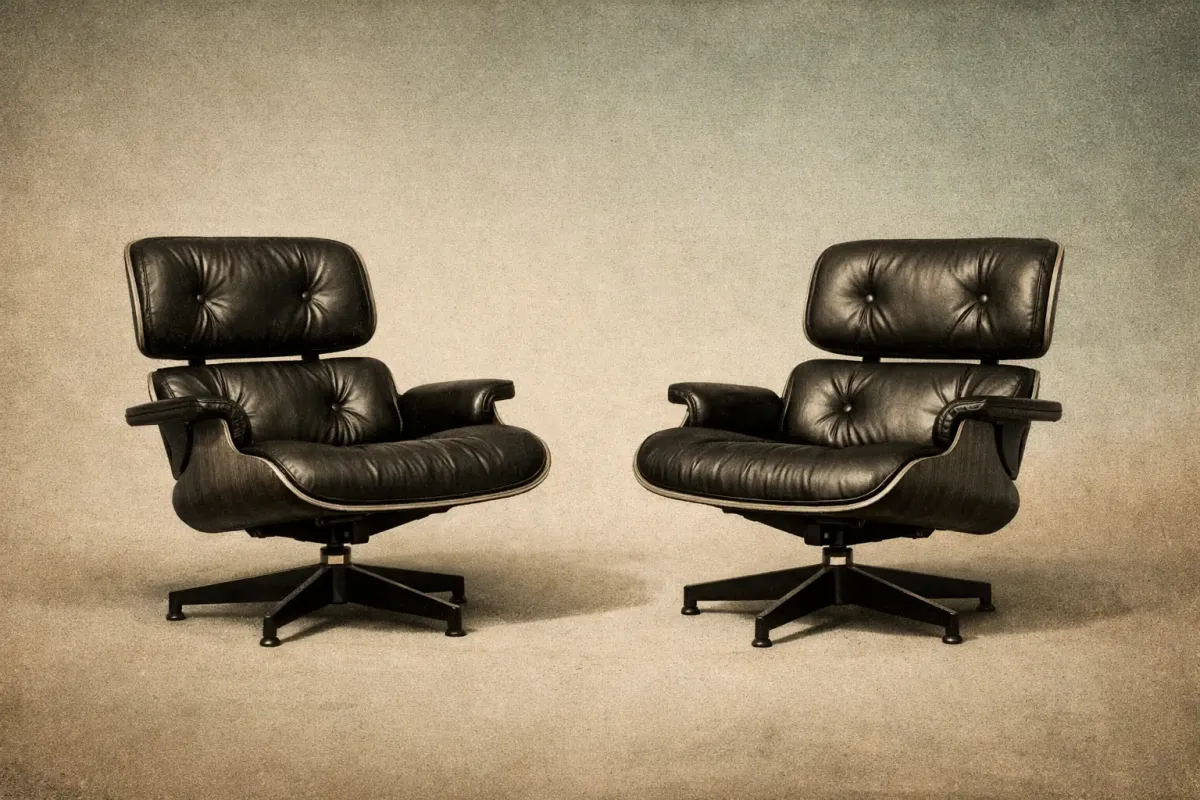
When you buy a dupe new from Amazon or AliExpress, you still know you bought the cheaper version. But when that same item gets listed on Marketplace three months later, photographed in someone’s living room with a location pin and a price, it comes across secondhand furniture or clothing. The origin gets washed. A replica of an Eames lounge chair (the Herman Miller original runs about $5,000; quality replicas go for $600 to $900) listed by someone in your neighbourhood looks like a great find, not obviously a knockoff.
Marketplace doesn’t categorize by brand authenticity, so a $600 lounge chair looks the same in the feed whether it came from a Herman Miller showroom or a dupe factory. The dupe, once it enters resale on Facebook Marketplace, basically gets laundered into just being a product.
What the algorithm picks for you
71% of TikTok shoppers say they find products by stumbling across them in their feed rather than searching for them. 36% of Pinterest users start product searches on the platform instead of Google. So, for a large share of consumers, the way they encounter products is no longer an active act; it just kind of happens while they're scrolling. This is the foundation on which the dupe economy runs.
When a creator posts a $14 version of a $90 product, and the algorithm pushes it to two million people, you get demand for an item that most of those viewers didn't know existed five seconds ago. They weren't shopping for the original or the dupe. The algorithm surfaced both at the same time, and the cheaper one won before anyone had a chance to develop an opinion about the original.
And this cycle moves incredibly fast. A designer releases a lamp, and within weeks, visually similar versions show up on Amazon, Temu, and Shein. TikTok creators review those versions, the algorithm promotes the reviews, and by the time most people encounter the design, they're encountering the dupe first. The original just becomes the expensive version of something they've already been sold on, if they ever see it at all.
The question that follows from all of this is: where does taste fit in? By "taste," I mean the personal sense of preference that was traditionally developed by actively seeking out new things, reading niche content, talking with friends, and refining what you like or dislike over time. But when what you see is determined by a feed and what you pay is decided by a comparison tool, much of that process is bypassed. You simply scroll, something looks good, the price is right, and you buy it. It seems that, rather than making active choices, most people now simply confirm the choices the algorithm has already made for them.
Experiential Retail to the Rescue
If the goal were always to pay the least possible amount, there would arguably be some benefits. Phia and Dupe.com introduce actual price transparency, and Marketplace extends the useful life of products that might otherwise end up in a landfill. But it also seems like a race to the bottom.
This also creates odd buying habits. When every price is undercut by pasting a URL and every brand can be visually matched, speed overtakes the process. The tools that help you find something cheaper also make it easy to buy more, as friction between seeing and owning continues to decline.
Brands are paying attention to this. In May 2023, Lululemon ran a "Dupe Swap" event in which customers could bring in knockoff Align leggings and trade them for the real thing. It generated 1.7 billion earned media impressions and drew 1,000 participants, half of whom were new to the brand. They've since trademarked both "Dupe Swap" and "Lululemon Dupe" as phrases.
Lululemon is not the only brand thinking this way. The experiential retail market is now valued at $132 billion and projected to more than quadruple by 2035. Louis Vuitton is building what its CEO calls a "never seen before" retail concept on the Champs-Élysées. Crocs opened a 4,000-square-foot store in New York that they're calling an "experiential theatre." Nike, Sephora, and Apple keep investing heavily in flagship locations built around interaction rather than just inventory. The logic running through all of these investments is pretty clear: if someone can replicate your product for a fifth of the price, you'd better be offering something beyond the product.
As dupes get better and cheaper, the experience of shopping becomes a bigger part of what brands have left to compete on, and a bigger part of what tastemaking actually looks like going forward.