Maybe spending money should be a little harder
Friction-maxxing is having a moment. And it might actually be good for your finances.

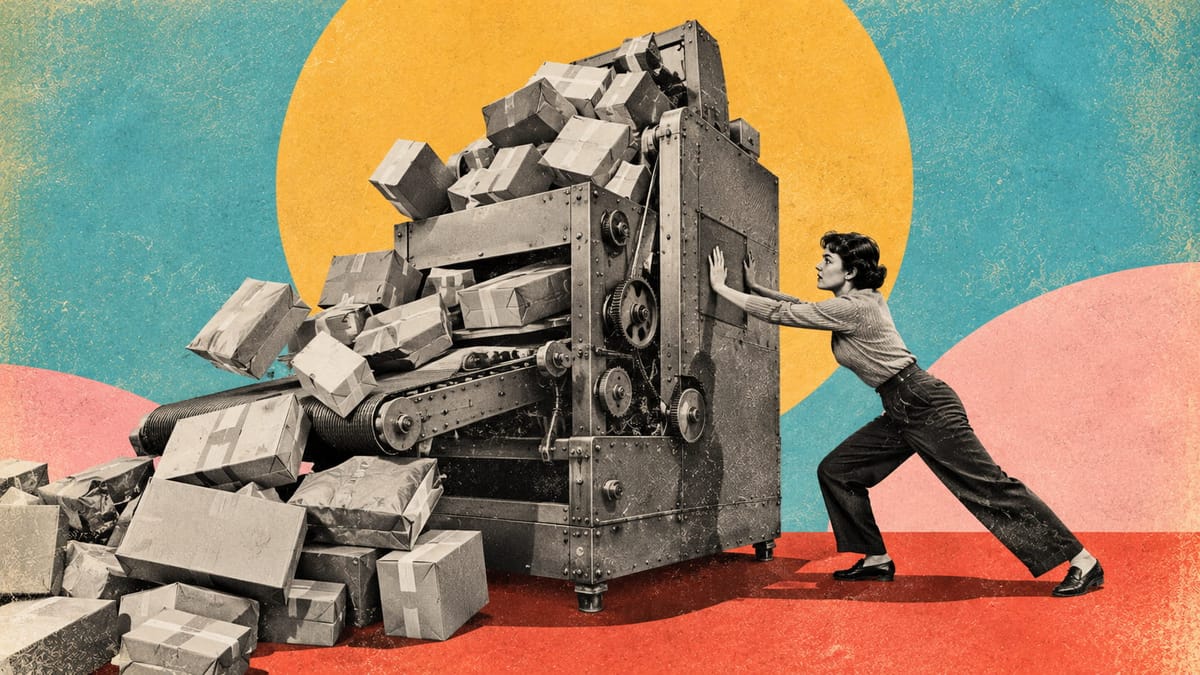
Think about the last thing you bought on Amazon that you didn't really need. Now imagine you'd had to leave your house, walk to the store, pay for it, and carry it all the way home.
Would you still have bought it?
There's a good chance you wouldn't have. Which makes you wonder how much of our spending is driven by what we actually want, and how much is simply because buying things has become ridiculously easy.
In January, Kathryn Jezer-Morton, a columnist for The Cut, coined the term "friction-maxxing":
Friction-maxxing is not simply a matter of reducing your screen time, or whatever. It’s the process of building up tolerance for “inconvenience” (which is usually not inconvenience at all but just the vagaries of being a person living with other people in spaces that are impossible to completely control) — and then reaching even toward enjoyment.
Her argument is that we've become so accustomed to convenience that even minor inconveniences now feel intolerable. And technology companies are more than happy to help us avoid them.
Her piece wasn't really about money. It was about how our constant attempts to make life easier might be making it less interesting, less rewarding, and even a little less human.
But I think there's a pretty compelling financial argument for embracing a bit more friction, too.
We've made spending money almost too easy
There's a reason retailers spend so much time figuring out how to eliminate steps from the purchasing process.
In a 2023 study published in Management Science, researchers examined what happened when an online retailer introduced one-click purchasing. Customers who adopted the feature increased their spending by an average of 28.5%. They visited the website more often and bought a wider variety of products.
The interesting thing about friction is that it gives us an opportunity to reconsider. When buying something requires even a little effort, we have to decide whether it's worth bothering. And sometimes it isn't.
What would friction-maxxing your money look like?
Let's start with takeout.
There's nothing wrong with ordering dinner when you don't feel like cooking. But if the restaurant is a 15-minute walk away, why not pick it up yourself?
The savings on delivery can add up, especially if you order regularly. But having to leave your house might be just enough to make you reconsider. You may decide to make something at home instead, particularly if you've already got a fridge full of groceries.
And if you still want takeout, get it.
The same principle applies to grocery shopping and cooking. We've become so accustomed to outsourcing food preparation that even making dinner can feel like too much work.
Of course, cooking takes time. And if you've got kids to feed, a demanding job, or a particularly exhausting day, that time is valuable.
But there's also something to be said for getting into the habit of buying groceries and preparing your own meals. It tends to be cheaper, you have a better idea of what you're eating, and you may actually come to enjoy it.
Then there's shopping.
Amazon has made buying things so effortless that it's easy to end up with purchases you barely remember making. One option is to go back to buying more things in person.
Say you need something for your kitchen. Instead of ordering it right away, you decide to walk to a nearby store. There's no guarantee you'll save money on the item itself and you might even pay a few dollars more.
But something changes when you're physically standing in a store, looking at the thing you're about to buy. You have to make a conscious decision to spend the money. And unlike online shopping, where adding another item to your cart is practically effortless, you have to think about how much you're prepared to carry home.
It's an interesting way to think about saving money. We're generally taught to look for discounts and better prices. But one of the most effective ways to spend less is to add a little inconvenience to the buying process.
You could also try being bored for a while
One of my favourite applications of friction-maxxing is taking a break from streaming subscriptions.
Most of us have accumulated a few over the years. Some we use regularly, others we keep because there's a show we might eventually get around to watching.
In a recent NerdWallet article, Beth Buczynski described how she and her husband reduced their streaming spending from around $89 a month to $20 by subscribing to one service at a time. Over a year, they saved more than $800.
You don't need to give anything up permanently, and there's really no reason to keep paying for five streaming services when you're only watching one.
Convenience is worth paying for. Sometimes.
I don't think anyone needs to feel guilty about paying for convenience.
There are plenty of circumstances where having groceries delivered or ordering dinner is absolutely worth the money. And if you've got limited time, mobility challenges, or responsibilities that make everyday errands difficult, some of these conveniences can be genuinely life-changing.
There's also nothing particularly admirable about spending two hours doing something you could reasonably afford to outsource.
But it's worth considering how often we're choosing convenience without really thinking about it. Walking to pick up dinner isn't exactly an ordeal. Shopping in a local store can be more enjoyable than scrolling through Amazon. And cooking something for yourself can be satisfying, even if the result isn't particularly impressive.
The financial benefits are almost a byproduct.
Friction-maxxing doesn't require you to make your life unnecessarily difficult. You can start with one small change and see whether you actually miss the convenience you're giving up.
But the next time you're about to spend money because something is just so easy to buy, consider making yourself work for it a little. You might be surprised how quickly you change your mind.