The Costs That Decide How Much Room You Have
The costs that squeeze a household are rarely the ones people scrutinize. A better way to read your spending is to understand which ones are the hardest to change.

Most of us learned to think about spending by category: housing, groceries, restaurants, subscriptions, and so on. Categories have their place, but they won't tell you which costs are actually shaping your financial life. We think a more useful first question about any cost is how hard it would be to change.
By that measure, a streaming subscription and a car loan have almost nothing in common. One of them takes five minutes to cancel, and the other will follow you around for years no matter what those years look like.
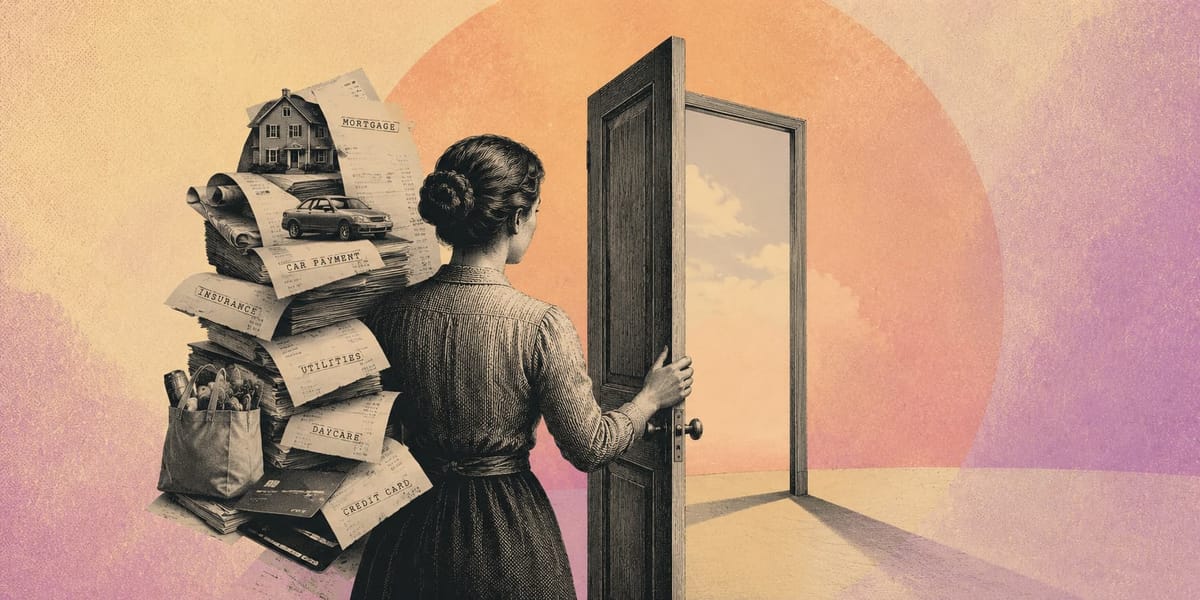
In our experience, households that feel squeezed rarely got there through one big reckless purchase (although it can happen!) The more common story is a gradual accumulation of fixed costs that each seemed manageable at the time: the rent went up, a car got financed, daycare started, a couple of subscriptions crept in. Nobody made an obviously bad call anywhere in that sequence, but by the end of it, most of the month's income was committed before the month began.
That's why we'd argue the sticker price of a new commitment matters less than how easy it is to change after the fact.
The costs that are hard to change
Rent, mortgage payments, car payments, utilities, childcare, and debt payments all share one trait: once they're in your life, removing them quickly is quite difficult. That doesn't make them bad. Most of them are completely normal costs when you have a home, a job, and maybe some kids. It does mean they deserve extra scrutiny before you take them on, because you can't easily walk them back if you turn out to be wrong.
The test we'd suggest is whether the new payment still fits during an expensive month, since those come around far more often than anyone budgets for. If a car payment only works when nothing else goes wrong, it hasn't really been tested yet.
People tend to run this math against the best version of a month, which doesn't always work. The problem is that real months are lumpy. A cost can be technically affordable and still leave your life with no slack in it.
The ones worth a yearly phone call
You may genuinely need home insurance, car insurance, a phone plan, and an internet connection, but needing the service is different from accepting whatever the renewal letter says. What you pay for these things depends a lot on how long it's been since anyone checked. Internet providers, in particular, love a promotional rate that increases dramatically after 12 months. If you use Stowe, you can easily see which months the bills creep up (and then take action). And you can also see what's typical to pay in your area, which helps you decide whether it's worth the time to renegotiate or switch.
We think this kind of saving is underrated because, more often than not, you don't have brand affinity for your phone plan, internet provider, or insurance company. You can keep the same coverage and the same service and simply stop overpaying for it.
Subscriptions
Subscriptions look like fixed costs on paper, but they're the least sticky costs you have, since almost all of them can be cancelled, paused, or restarted whenever you like. The real problem with them is invisibility. You signed up to watch the latest season of The Pitt, but forgot to cancel long after you finished the final episode.
The test we use is a single question: would you sign up for this again today? If yes, keep it and enjoy it guilt-free. If no, cancel it. You can always renew in a couple of months.
This is another place we built Stowe to help. Stowe finds your subscriptions and lets you cancel many of them inside the app, which matters more than it might sound, because subscription cleanup almost never fails from lack of intent. You'll often decide to deal with it later, and later becomes next month, and next month renews. An audit every couple of months, keeping what you'd choose again and cancelling the rest, is all this ever needs.
Groceries are usually the wrong villain
Groceries take a lot of blame, mostly because they're visible. You're at the store every week, and the total at checkout has gotten genuinely absurd. There are real ways to trim the bill, like planning ahead and wasting less, but we'd push back on the idea that groceries are where the big savings live. Food is one of the few categories where spending less can make your life directly worse.
The better question is where food spending stops being a choice, and for a lot of people that's takeout. Takeout is rarely a decision so much as a default. The day ran long, the fridge holds nothing obvious, someone opens the app, and dinner appears. Once or twice a week, that might be exactly the right call. At five times a week, it can become one of the highest variable costs in the house without anyone ever having chosen it.
Most people, given the actual choice, would rather have one great dinner out with friends than five forgettable delivery orders.
What meal planning is actually for
Meal planning has a reputation problem because it sounds like a Sunday afternoon spent portioning chicken into labelled containers. The real goal is simply fewer nights where delivery is the only available plan. Three dinners you can make in under 20 minutes and a freezer meal for emergencies.
With this approach, takeout stops being the default choice when you run short on time. And the money that was leaking into forgettable orders becomes available for things you'll actually notice: better groceries, a proper dinner out, or a less stressful month.
Sorting costs by how they behave
So instead of starting with categories, try sorting your costs by behaviour. Sticky fixed costs warrant caution before you add them, and renegotiation wherever possible. Flexible recurring costs like subscriptions deserve a quick audit every couple of months. Everyday spending deserves a look for defaults, meaning the places where money went somewhere you wouldn't have chosen on purpose.
None of this is about spending as little as possible. We just think more of your money should be available for the things you'd choose deliberately, and that starts with noticing which of your costs hold the most power over your month.